
What Does Ashwagandha Do? Benefits Explained
Ashwagandha benefits have become one of the most discussed topics in mental wellness, and for good reason. Interest in adaptogens has grown steadily as more people look for science-backed, plant-based tools to manage stress, sharpen focus, and sleep better. But the surge in popularity has also brought a flood of overclaims, underdosed products, and marketing noise that makes it hard to know what's real.
SUPPLEMENTS
Powerful Digital Marketing
5/29/20267 min read
What Does Ashwagandha Do? Benefits Explained
The compound behind the effect: withanolides
Ashwagandha's therapeutic activity comes from a group of bioactive compounds called with anolides, steroidal lactones concentrated primarily in the root. These compounds interact with receptors in the nervous system and adrenal glands, influencing how the body perceives and responds to stress at a physiological level. This is why the phrase "standardised extract" on a label matters so much: it tells you what percentage of those active compounds is actually present in each capsule, not just how much plant material went into the product.
The adaptogen mechanism and the HPA axis
An adaptogen is a compound that helps your body modulate its stress response rather than suppress or override it. Ashwagandha works primarily on the hypothalamic-pituitary-adrenal (HPA) axis, the system that governs cortisol release. Under chronic stress, this axis stays activated, keeping cortisol elevated well beyond what's useful, which drains energy, disrupts sleep, and clouds thinking over time.
What the research on Ashwagandha benefits shows is a gradual normalisation of that response, not a spike or a crash. It doesn't sedate you like a sleep drug, and it doesn't stimulate you like caffeine. That recalibration is what sets adaptogens apart from stimulants, sedatives, or other supplement categories.
Ashwagandha Benefits for Stress, Anxiety, and Cortisol: What the Clinical Studies Show
What the 2024 meta-analysis found
The most rigorous recent summary of the evidence is a 2024 systematic review and meta-analysis covering 15 studies and 873 participants. At the 8-week mark, ashwagandha produced a mean reduction of -17.48 points on the Hamilton Anxiety Rating Scale and -11.75 points on the Perceived Stress Scale, with statistically significant differences versus placebo. Cortisol reduction came in at a pooled effect size of approximately -2.36 compared to placebo at 8 weeks. Those are meaningful, measurable clinical changes across a large number of participants, not anecdotal reports. For details, see the 2024 systematic review and meta-analysis.
The 8-week window matters. Most of the trials showing the strongest effects ran at least 6 to 8 weeks, which means short-term experiments of two to four weeks are not a reliable test of whether ashwagandha is working. Adaptogens require consistency to accumulate effect. It's also worth noting that the same review found no significant improvement in quality-of-life scores, a sign that the research is honest rather than uniformly positive. If you want to explore specific ongoing and registered trials, you can review public listings of registered clinical trials.
Cortisol reduction in double-blind trials
In a 60-day, double-blind, placebo-controlled trial using 240 mg per day of a standardised ashwagandha extract, participants showed significant reductions in HAM-A scores and a nearly 23% drop in morning cortisol compared to placebo. Morning cortisol is clinically significant because it reflects the baseline stress load the body carries into each day, and elevated morning cortisol is a common marker in burnout and chronic stress. Reducing it measurably over two months is a meaningful outcome for anyone dealing with sustained stress that doesn't switch off after work.
Ashwagandha Benefits for Sleep and Cognitive Performance
Sleep quality and recovery
Several randomised controlled trials have looked specifically at sleep outcomes, and the sleep evidence is solid, if narrower in scope than the stress data. In one study, the highly concentrated Shoden extract showed benefits at just 120 mg per day in adults with self-reported sleep problems over six weeks. A separate 8-week study using KSM-66 at 250 to 600 mg per day found that participants with insomnia experienced better sleep quality, shorter time to fall asleep, and improved daytime alertness versus placebo.
The mechanism connects directly back to cortisol. Lower evening cortisol primes the body for deeper, more restorative sleep cycles rather than the shallow, disrupted sleep that often accompanies chronic stress. Ashwagandha's sleep support comes from calming the stress system, not from forcing sedation, which is what distinguishes it from melatonin, sleep gummies, or prescription aids. That distinction matters for people who want restorative sleep without morning grogginess or dependency concerns.
Male fertility, physical performance, and immunity
Beyond stress and sleep, several smaller RCTs have found improvements in sperm quality and testosterone levels in men supplementing with Ashwagandha, typically at 300 to 600 mg per day of KSM-66. Athletic performance studies have shown improvements in VO2 max, muscle recovery, and endurance in active adults using the same dose range. These are real findings from controlled studies, not gym folklore.
Immune support and mood balance show promising early signals in the literature, but the evidence base in those areas is thinner than what exists for stress and cortisol. That distinction is worth being clear about rather than treating every potential benefit as equally established.
KSM-66, Sensoril, and Shoden: why the extract on the label matters
How standardisation changes the dose you actually need
These three branded extracts differ in their source material, withanolide concentration, and therefore the dose required to produce clinical effects. KSM-66 is a root-only extract standardised to approximately 5% withanolides, typically studied at 300 to 600 mg per day. Sensoril is a root-plus-leaf extract standardized to around 10% withanolide glycosides, showing benefits at 250 to 500 mg per day. Shoden is the most concentrated of the three at 35% withanolide glycosides, which is why clinical evidence supports it at doses as low as 120 mg per day.
A product labeled "500 mg ashwagandha root extract" with no standardisation marker tells you almost nothing about its actual potency. Milligrams without a named extract and declared withanolide percentage are not a reliable guide to what you're actually getting. This single label detail separates a product worth buying from one that's essentially guesswork in a capsule.
Clinical Evidence: Ashwagandha Benefits Explained Through Dosing
The NIH Office of Dietary Supplements summary of ashwagandha research evidence notes that benefits were more consistent and more pronounced at 500 to 600 mg per day for root-only extracts like KSM-66, while 125 mg per day doses were not effective in multiple trials using both KSM-66 and Sensoril. The practical guidance is to evaluate the extract name and milligram dose together, not one without the other. Studies running shorter than four to six weeks also consistently underperform versus those running eight weeks or more, so give the supplement adequate time before drawing conclusions. For an authoritative practitioner-facing summary, see the NIH Office of Dietary Supplements summary.
Side effects, safety, and who should not take ashwagandha
Common side effects and the liver injury concern
At clinically studied doses, the most commonly reported side effects are gastrointestinal: nausea, loose stools, and stomach upset. These are generally dose-dependent and mild. Starting at the lower end of the therapeutic range and taking ashwagandha with food reduces these effects for most people.
The more serious concern is hepatotoxicity. There are documented cases of Ashwagandha-associated liver injury in the published literature, with a broader synthesis identifying 37 published cases showing hepatocellular, mixed, and cholestatic injury patterns. Symptoms to watch for include jaundice, dark urine, abdominal pain, fatigue, and weakness. Most cases resolved after stopping the supplement, but three deaths and one liver transplant have been reported in the literature. If any liver-related symptoms appear, stop use immediately and consult a physician. This is not a reason to avoid Ashwagandha outright for most healthy adults, but it is a reason to stay within studied dose ranges and not treat "more" as better. For a straightforward consumer-facing safety overview and list of potential interactions, see WebMD's overview of ashwagandha.
Who should avoid it: contraindications and drug interactions
Ashwagandha is not appropriate for everyone. Pregnant people should avoid it entirely, as safety data during pregnancy does not exist. People with autoimmune disease, thyroid disorders, or liver conditions should consult a healthcare provider before starting, as Ashwagandha has been linked to shifts in thyroid hormone levels and documented liver injury cases. Anyone scheduled for surgery should also stop use in advance, as the herb may affect hormonal and immune function.
The most clinically significant drug interaction concerns are worth knowing before you start. Thyroid medications are sensitive to even modest hormonal shifts, which matters for anyone titrating levothyroxine. Sedatives and barbiturates carry a real risk of additive drowsiness. Blood pressure medications may combine with Ashwagandha to cause hypotension, particularly in older adults. Blood sugar-lowering drugs also warrant monitoring. Alcohol should be used with caution, and children should not take Ashwagandha, as pediatric safety data does not yet exist.
How to choose a quality ashwagandha supplement
What to look for on the label before you buy
The signals that indicate a well-formulated product are specific. Look for a named standardised extract (KSM-66, Sensoril, or Shoden), the declared withanolide percentage, third-party testing certification, and a dose that falls within the clinically studied range for that extract. These aren't premium features reserved for expensive products. They're the baseline you should expect from any supplement making evidence-based claims about ashwagandha benefits.
The red flags are equally clear: proprietary blends where the Ashwagandha amount isn't disclosed, no standardisation information on the label, artificial fillers, and non-vegan capsule materials like gelatin if you're following a plant-based lifestyle. A product that scores poorly on label transparency is a product you can't evaluate rationally before purchasing.
Why a vegan, clean-label formulation changes how consistently you take it
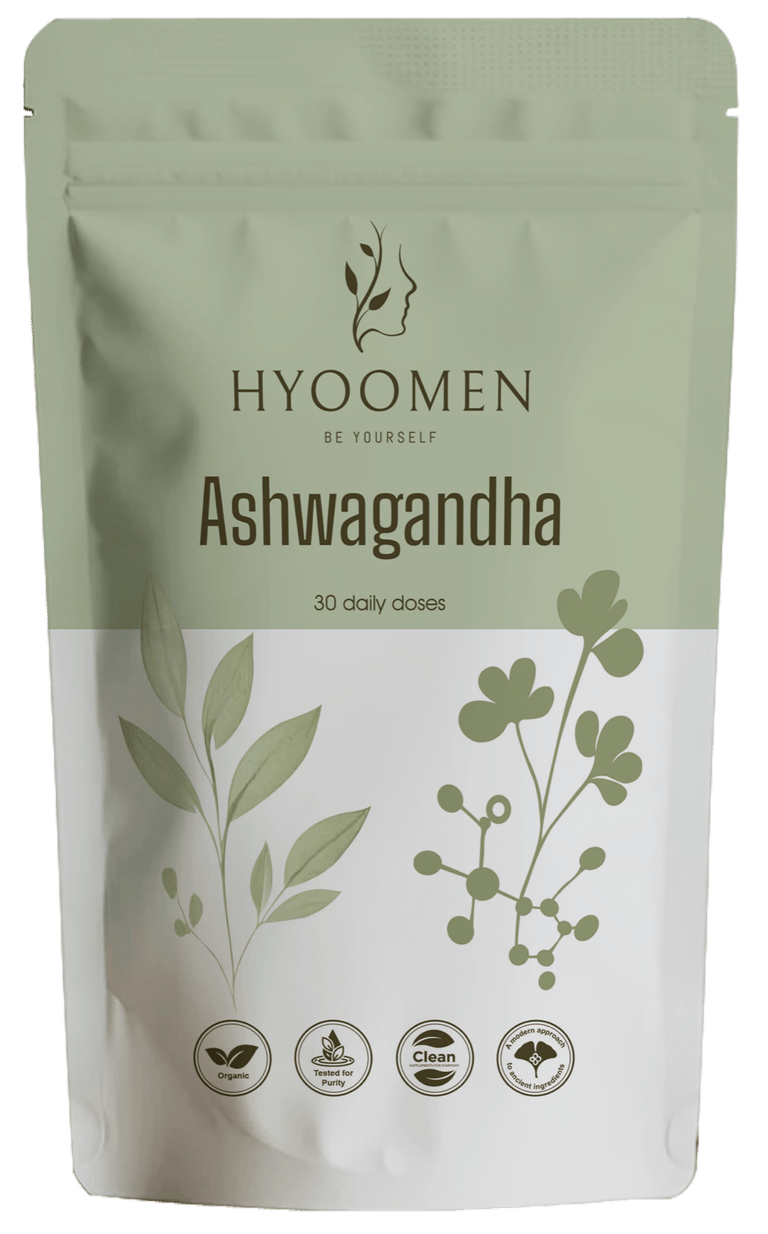
Hyoomen's Ashwagandha capsules use KSM-66 at a dose within the clinically studied range, third-party tested and 100% vegan, because those are the factors the research actually supports. The reason this matters goes beyond ingredient purity. When a supplement fits seamlessly into a plant-based lifestyle and you trust exactly what's in it, you take it consistently, and with ashwagandha, consistency over 6 to 8 weeks is where the evidence-backed benefits actually show up. The benefits of adaptogens accumulate with time and regularity, and formula quality directly determines whether the supplement delivers on what the studies found.
The bottom line on ashwagandha benefits
The clinical evidence for Ashwagandha benefits related to stress, anxiety, cortisol, and sleep quality is real, well-replicated, and specific. The clearest results appear at 6 to 8 weeks of consistent use with a named, standardised extract at a dose that matches what the studies actually used: generally 300 to 600 mg per day for root-only extracts like KSM-66, or lower for more concentrated options like Shoden. The milligram number on a label means nothing without that context.
The safety profile is reasonable for most healthy adults at therapeutic doses, but Ashwagandha isn't for everyone. The liver injury cases in the literature are documented and real, pregnancy avoidance is advised across all sources, and the drug interactions with thyroid medications, sedatives, and blood pressure drugs carry genuine clinical weight. Know the contraindications before you start.
If lowering cortisol, improving sleep quality, and building a sustainable daily wellness practice are your goals, ashwagandha is one of the more evidence-backed botanical tools available. Start with a clean, transparent formulation built on clinical evidence, not a 500 mg capsule with no further information. Browse Hyoomen's ashwagandha if you want a product that meets that standard from the first bottle.
ADDRESS
The Powerful Group Limited
124 City Road
London
United Kingdom
EC1V 2NX
WORKING HOURS
Monday - Friday 9:00 AM - 6:00 PM
Saturday - Sunday 8:00 AM - 12:00 PM
Want to Call? Ask our Powerful Bot for the Number