
Grow Your Hotel Brand on Instagram & TikTok 2026 — Guide
Learn a dual-platform system to turn Reels and TikTok videos into bookings. Get formats, creator partnerships, AI tools, and an actionable 90-day plan.
POWERFUL SOCIAL
Powerful Social
6/21/202610 min read
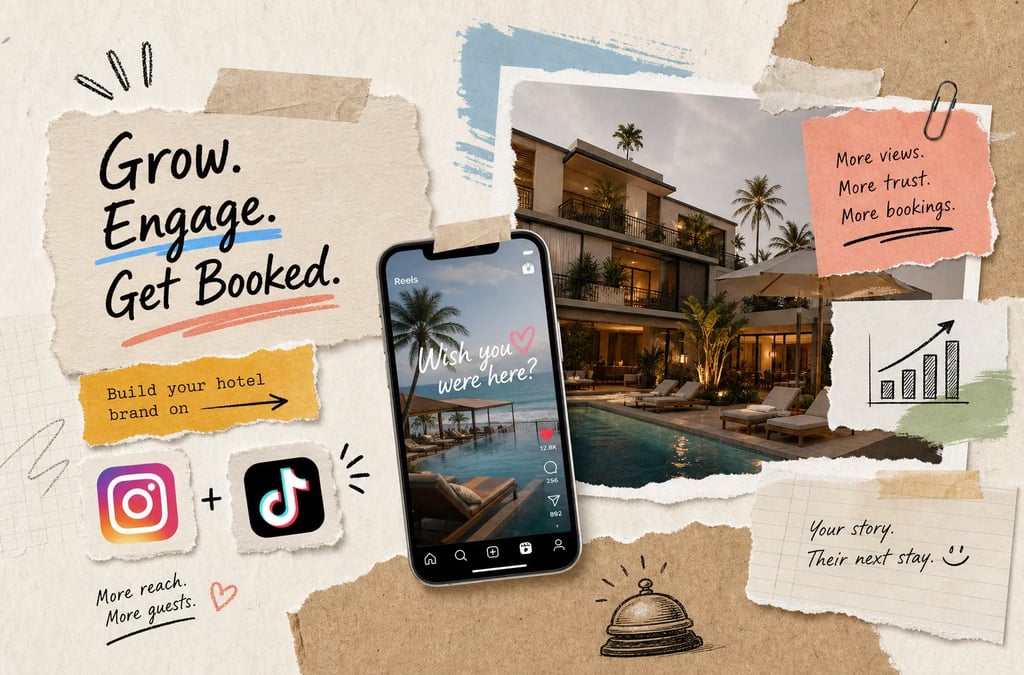
How to Grow Your Hotel Brand on Instagram and TikTok in 2026
Most hotel marketing teams are not losing on Instagram and TikTok because they post too little. They are losing because they post without a system. Content goes out, engagement ticks along, and the booking engine stays quiet. That gap between social activity and actual reservations is a strategy problem, not a volume problem. Growing a hotel brand on Instagram and TikTok in 2026 requires a clear dual-platform approach, one that connects content formats to guest decision stages and closes the loop with deliberate booking mechanics.
In 2026, both platforms have changed how they surface hotel content to new audiences. Instagram's algorithm now rewards saves, shares, and watch-through rate far more than follower count or post frequency. TikTok has shifted toward rewarding longer watch time, with videos over 60 seconds receiving disproportionate reach when they hold attention. For organic discovery, both platforms weight attention-based signals, watch time, saves, shares, in ways that can level the playing field for high-quality content from smaller accounts. Paid advertising is a different matter: large hotel groups retain budget-driven advantages there. But on the organic side, independent and boutique properties willing to approach content strategically have a genuine opening.
This guide covers the formats, algorithm signals, creator partnership structures, and AI-powered tools that connect social engagement to real bookings. By the end, you will have a structured approach and a 90-day framework you can begin implementing this week.
Why both platforms now demand a different hotel content approach
The algorithm shift that changed hotel discovery in 2026
Instagram's ranking signals for Reels have moved decisively away from vanity metrics. The platform now prioritises watch time and completion rate, DM shares (sends per reach), rewatches, and saves. For hotel content specifically, saves are particularly powerful because travellers use Instagram as a planning tool, saving room tours, destination guides, and offer posts to revisit later. A Reel that receives 200 saves is telling the algorithm that your content is worth showing to more people.
TikTok operates differently but with a parallel logic. Its For You page still functions as a discovery engine for accounts with zero existing followers, small boutique hotels can achieve substantial organic reach with a single well-constructed video, regardless of their follower count. The platform rewards attention retention above all else: videos that hold viewers past the halfway point and into a rewatch are amplified significantly. These mechanics mean that follower-first strategies are obsolete on both platforms. What matters now is content quality measured by behaviour, not audience size measured by numbers.
What this means for independent and boutique hotel brands specifically
Large hotel chains have budget advantages in paid social. They can outspend independent properties on Meta ad placements and run always-on retargeting at scale. The 2026 algorithm dynamics, however, level the organic discovery playing field for smaller brands, because authentic, low-production content consistently outperforms polished brand creative on booking-driven metrics. UGC-style video outperforms glossy promotional assets in hospitality because it builds trust faster, and trust is what converts interest into a booking.
For a boutique hotel in Edinburgh or a family-run coastal property in Devon, this is an advantage, not a handicap. Your team can create content that feels real in a way that a large chain's marketing department simply cannot replicate. The properties that understand this are already winning organic reach that their larger competitors are paying significant sums to achieve through ads.
How hotels can grow on Instagram and TikTok in 2026: content formats that move guests from scroll to booking
Using Reels, Stories, and carousels across the full booking funnel
The most common mistake hotel teams make is using Instagram formats interchangeably. Each one belongs at a specific stage of the guest decision journey, and misaligning them wastes both content effort and algorithm potential.
Reels belong at the top of the funnel. Room reveals, property walkthroughs, destination clips, and experience-led storytelling all create desire and attract new audiences. The hook in the first three seconds and the watch-through rate determine how far the algorithm distributes your content, so lead with your most visually compelling asset. Stories work at the urgency end of the funnel: flash promotions, limited availability alerts, behind-the-scenes moments, and timely events. They are short-lived and feel immediate, which makes them the right vehicle for content with a deadline. Carousels sit in the consideration stage, giving prospective guests the information they need to evaluate your property, room category comparisons, package inclusions, or dining and spa facilities in a swipeable format that extends dwell time and invites interaction.
Dynamic retargeting and direct-booking CTAs that reduce friction
Instagram dynamic ads allow hotels to automatically retarget people who have visited the website or abandoned the booking engine mid-flow. These audiences have already demonstrated intent, so the cost to convert them is significantly lower than cold audiences. Meta's travel advertiser benchmarks indicate that dynamic ads deliver a lower cost-per-booking than standard ad formats, a meaningful difference for hotels managing tight acquisition budgets.
The booking CTA on your Instagram business profile and ad placements removes steps between interest and reservation. Always link directly to the specific offer or room page, never the homepage. A guest who saw a Reel about your sea-view suite and clicks through to a generic homepage has lost the thread entirely. Keep the landing page visually consistent with the social creative so the journey from Instagram to booking engine feels seamless rather than jarring.
Grow your hotel brand on TikTok in 2026: tactics and audio formats that deliver hospitality reach
Staff-led video, UGC-style clips, and comment-reply posts
Employee-generated content is one of the most underused and highest-performing formats for hospitality brands on TikTok. When a member of your front-of-house team appears on camera showing what a check-in experience actually looks like, or your head chef films a 45-second kitchen walkthrough, it builds a level of trust that no polished brand video achieves. Viewers see real people, which makes the property feel approachable and worth visiting.
Comment-reply videos are another underused format with strong native fit. When a viewer asks "what does the breakfast look like?" or "how far is the walk to the beach?", filming a short reply video answers the question and produces a new piece of content that is inherently relevant to other prospective guests with the same query. These videos serve as both discovery content and trust-building assets that shorten the path from curiosity to booking click.
How to use trending audio and challenge formats without losing brand identity
TikTok's algorithm surfaces content using trending sounds to a broader audience, giving hotel brands a discoverability boost when they use audio that is gaining traction. Lo-fi wellness and calming soundscapes are performing strongly for accommodation brands in 2026, aligning naturally with the rest and relaxation promise that hotels are already selling. Nostalgic remixes and creator-endorsed earworm tracks are also generating strong reach for properties willing to use them with genuine creativity.
The concern most hotel marketers raise is that trend-chasing feels off-brand. The practical solution is a simple relevance test before committing to any trend: does this audio or format let me show something real and compelling about my property? If the answer is yes, use it. If participation requires forcing an awkward connection, skip it. TikTok's Creative Centre shows trending sounds in real time, and building a habit of reviewing it weekly, even briefly, means relevant opportunities surface consistently without compromising your brand identity. For a practical hospitality-focused perspective on the platform, see this guide to TikTok for hotels.
Converting social engagement into direct bookings
Low-friction booking paths from both platforms
Social engagement does not automatically produce bookings. You need deliberate mechanics connecting the two. On Instagram, this means a clear bio link pointing to your booking engine or a specific offer, Story link stickers for time-sensitive promotions, and UTM parameters on every link so you can see which content is actually driving booking-engine traffic. On TikTok, your profile bio link is the primary conversion route for organic content, while paid campaigns can incorporate direct booking CTAs to shorten the path further.
UTM tracking is non-negotiable for any hotel serious about attributing bookings to social. Create a separate tagged URL for each platform and campaign, for example: utm_source=tiktok, utm_medium=organic_social, utm_campaign=summer-suite-tour. This level of specificity inside GA4 and your booking engine analytics tells you not just that social drove traffic, but which piece of content on which platform produced a reservation. The signals to track weekly are saves, DM enquiries, link clicks, and booking-engine referrals. Direct organic booking conversion rates are typically low without a deliberate path in place, so building that path is where the real work sits. For tactics that combine AI with booking optimisation, see AI Tour Bookings: 3 Tactics to Boost Direct Bookings 2026.
Creator partnerships and UGC briefs that work for hotel brands
For UK hotels working with travel-focused content creators in 2026, a realistic paid partnership range is £150 to £500 per UGC video, with more experienced creators or complex briefs sitting at the higher end. Gifted stays with no cash fee remain common for smaller properties working with emerging creators, but the value of the arrangement depends entirely on what the creator delivers and whether the hotel retains usage rights for the content.
Every creator deal should specify four things upfront: deliverables (number of videos, format, and platform), usage rights (organic-only versus paid ads and website placement, with extended rights typically adding 30 to 50 per cent to the base fee), exclusivity terms (usually a category restriction of 30 to 90 days), and revision rounds (one to two rounds is standard). A strong creator brief also defines the hook style, the CTA the creator should include, key property assets to feature, and the exact booking URL to reference. Hotels that invest ten minutes in a proper brief consistently receive better content than those who hand over a room key and wait. For a practical primer on hotel social media marketing best practice, consider this industry guide: hotel social media marketing.
How AI-powered scheduling and analytics give hotel teams a competitive edge
What AI tools actually do for hotel social media management
Running Instagram and TikTok simultaneously as a coordinated system, rather than two disconnected content calendars, requires more than a good posting schedule. AI-powered scheduling and analytics platforms now handle cross-platform content distribution from a single dashboard, generate performance analytics that identify which content types are driving saves and booking-engine clicks, recommend optimal posting times based on audience behaviour patterns, and score content before it goes live. For a small hotel marketing team, these functions are practical necessities when managing two algorithm-heavy platforms that each reward different formats, timing, and engagement patterns. Read our overview of Social Media AI Tools That Transform Travel Marketing for tool recommendations and use cases.
The measurable benefit for hotels is fewer wasted posts and faster iteration. Rather than waiting weeks to notice that room-tour Reels outperform lifestyle flat-lays, AI analytics surfaces those patterns early in the campaign cycle. That speed of learning compounds over a 90-day period into a content strategy that is genuinely optimised for your specific audience rather than built on generic best-practice templates. For more detail on how social platforms rank content, see Sprout Social's guide to the Instagram algorithm, which unpicks the ranking signals influencing reach and distribution.
How Powerful Digital Marketing deploys this for hotel clients
At Powerful Digital Marketing , we offer integrated Instagram and TikTok management designed specifically for independent hotels and boutique properties across the UK and US markets. Where generic social media agencies apply the same framework to every client, our approach is built around hotel industry-specific knowledge: seasonal demand patterns, traveller psychology at each booking stage, and the behavioural signals that indicate genuine booking intent versus casual browsing. Our AI scheduling and analytics tools sit on top of that industry expertise, not in place of it. We also publish complementary thinking on video platforms in pieces such as Why Travel Companies Should Rethink YouTube in 2025, useful if you are considering a broader long-form video strategy.
Hotel clients benefit from dual-platform management where content is planned and optimised as a coordinated strategy, with Instagram handling consideration and conversion and TikTok driving discovery and demand generation. If you are an independent property or boutique hotel that wants this built and managed rather than pieced together from scratch, that is the work we do, and we would be glad to talk through what it looks like for your specific property.
A 90-day framework for growing your hotel brand on Instagram and TikTok in 2026
Engagement and follower-growth benchmarks to measure against
Realistic 2026 benchmarks for hotel accounts are: Instagram feed engagement of 1 to 3 per cent, Instagram Reels engagement of 2 to 4 per cent, and TikTok engagement of 2 to 4 per cent, with stronger performance for accounts producing native, video-first content. TikTok tends to deliver faster follower growth than Instagram, where gains are steadier and more incremental. Follower count, however, is a lagging indicator and a poor weekly metric.
The numbers your team should track every week are saves, shares, link clicks from bio and Stories, and booking-engine referrals from UTM-tagged URLs. These signals tell you whether your content is moving people toward a booking, not just whether they noticed the post. If you need a refresher on how to measure engagement consistently, Hootsuite's walkthrough on how to calculate engagement rate is a practical reference.
The 90-day content and growth plan by phase
Phase one (days 1 to 30) is about establishing a baseline. Audit your existing content performance on both platforms and identify which formats have historically driven saves and link clicks versus which have simply accumulated passive likes. A useful starting point is pulling your top ten posts by saves on Instagram and your top ten by watch-time completion on TikTok, that comparison quickly reveals where your content is earning attention versus where it is drifting past. Establish a consistent posting cadence on both platforms and test three to four content formats per platform to understand what resonates with your specific audience. This phase is diagnostic, not promotional.
Phase two (days 31 to 60) is where you double down. Take the formats that drove saves and booking-engine clicks and increase their frequency. Launch one creator or UGC partnership using the brief structure outlined above. Begin Instagram retargeting campaigns targeting website visitors and booking-engine abandoners with dynamic ads tied to the rooms or offers they viewed.
Phase three (days 61 to 90) is optimisation. Introduce a trending audio habit on TikTok using the Creative Centre, refine the booking path on both platforms based on UTM data, and set monthly KPI targets derived from the actual benchmarks your account established in phase one. By day 90, you have a data-led content system rather than a content calendar built on guesswork.
The system matters more than the content volume
Posting more was never the answer. Hotels seeing genuine booking movement from Instagram and TikTok in 2026 are the ones treating each platform as a distinct stage in the guest decision journey: TikTok for discovery and demand generation, Instagram for consideration and conversion. Running them as a coordinated system, with clear format roles, deliberate booking paths, UTM tracking, and AI-powered analytics closing the loop, is what separates brands accumulating engagement from brands generating reservations.
The 90-day framework in this guide gives you a structured starting point for growing your hotel brand on Instagram and TikTok in 2026. Phase one costs nothing but time and produces insights that most hotel marketing teams do not currently have. Phases two and three convert those insights into a repeatable growth system. If you want that system built and managed with AI tools and genuine hospitality industry expertise behind it, Powerful Digital Marketing works with independent hotels and boutique properties that are serious about turning social performance into direct booking revenue. Start your 90-day plan, book a free audit today.
ADDRESS
The Powerful Group Limited
124 City Road
London
United Kingdom
EC1V 2NX
WORKING HOURS
Monday - Friday 9:00 AM - 6:00 PM
Saturday - Sunday 8:00 AM - 12:00 PM
Want to Call? Ask our Powerful Bot for the Number